
Introduction: From ‘What If’ to ‘I Got This’

Let’s be real for a minute. Have you ever gotten that pit-in-your-stomach feeling when your mechanic gives you the number, or you open an envelope from the dentist? That feeling where you mentally calculate how much interest you’ll pay on your credit card just to survive this unexpected hit? Ugh. It’s the worst.
We tend to think financial security is reserved for Wall Street wizards, but honestly, it’s far simpler—and way more accessible. The key isn’t a secret stock tip; it’s the good old Emergency Fund. If you’re ready to make a change, I’m here to show you exactly how to build an emergency fund in 30 days. It’s not a luxury; it’s your personal financial bodyguard, the thing that lets you shrug and say, “I got this, life.“
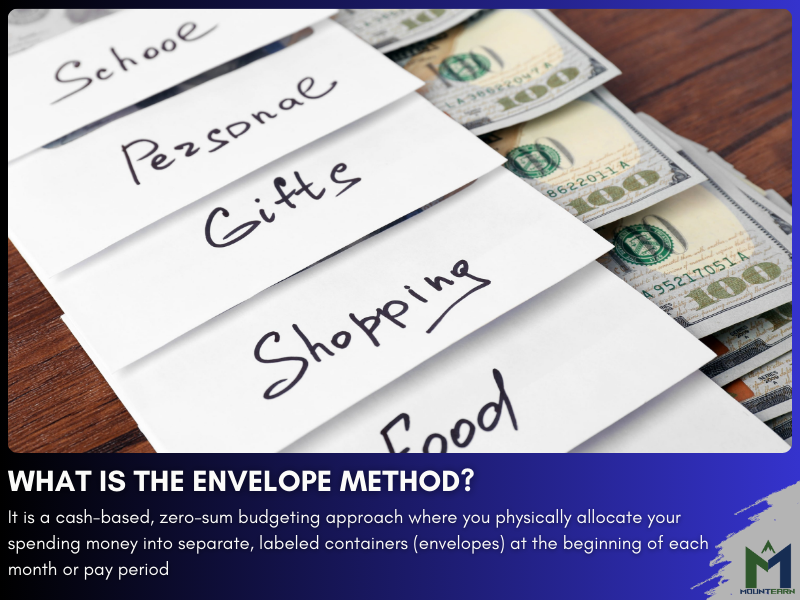
If budgeting scares you, you can also read my post on The Envelope Budgeting System which helps you stay accountable with your money.
Forget the idea that this has to be a slow, painful grind. We are going to sprint. In this next month, we are laying the foundation for a life where unexpected costs don’t trigger a panic attack. Ready to stop crossing your fingers and start building your financial shield? Let’s go.
The 30-Day Blueprint: Building Your Shield
This isn’t just a to-do list; it’s a transformation plan. We’ve broken this colossal task into four manageable weekly missions. Treat each week like a distinct challenge.
Week 1: The Mindset Shift & The Scavenger Hunt (Days 1-7)
The Goal: Define your ‘Why,’ and find your first $100-$300 to seed the fund.
- Day 1: Define Your Number (And Your ‘Why’): Ditch the fear of the “six months of expenses” rule for now—that’s Level 2. We are setting a Starter Goal: $1,000. That’s your first major milestone, enough to cover most minor life hiccups (a new tire, an unexpected deductible). Now, the crucial part: Why are you doing this? Write it down. Is it to sleep better? To quit living paycheck-to-paycheck? Your ‘Why’ is your emotional fuel. Don’t underestimate this step—it’s what keeps you going when motivation fades.
- Day 2-3: The Money Scavenger Hunt: Time to become a detective in your own home! We need quick, immediate cash to give the fund a jolt. Look for things that are gathering dust but still hold value. That designer bag you haven’t touched in a year? That old gaming console? List them on Facebook Marketplace or a local consignment app today. This is your seed money. It’s not about becoming a minimalist; it’s about making your dormant stuff work for you.Find items in your home gathering dust. Sell them on Facebook Marketplace or eBay
- Day 4-5: Taming the Subscriptions: Go through the last three months of bank statements like a hawk. Find every single recurring payment. Spotify, Netflix, that meal prep app you forgot to cancel. Ask yourself: Do I use this more than once a month? Be ruthless. Cancel or pause the non-essentials. If you save $50 this month, transfer that $50 instantly to your fund. It’s the easiest money you’ll ever make.
- Day 6-7: The Dedicated Home: You wouldn’t store your passport and your dirty laundry in the same place, right? Your emergency fund needs a dedicated, separate home. Open a High-Yield Savings Account (HYSA). Name the account something motivational like “Peace Fund” or “Life Buffer.” Transfer every dollar you found from your scavenger hunt and subscription purge into this new account. Crucial Rule: It must be separate from your everyday checking so you aren’t tempted to dip into it for a pizza night.
Week 2: The Income Turbocharge (Days 8-14)
The Goal: Generate a one-time income boost and solidify your weekly savings commitment.
- Day 8-10: The Side Hustle Sprint: It’s time for a short, intense burst of effort. Dedicate a few evenings or a weekend morning to earning extra. Walk dogs, deliver food, offer to organize a friend’s garage for cash, or complete quick freelance tasks online. This is not your new career; it’s a financial power-lift designed purely to push you toward that $1,000 goal faster.
- Day 11-12: The Bill Negotiation Power-Up: Put on your adulting hat and call your phone, cable/internet, and insurance providers. Be polite but firm. Use the magic phrase: “I am looking to lower my monthly payment.” Often, they have unadvertised promotional rates. If you save even $10-$20 a month on three different bills, that’s massive annual savings! Transfer the first month’s savings directly to the fund.
- Day 13-14: Automate and Forget: This is where we make savings foolproof. Look at how much more you need to hit your $1,000. Divide the remaining amount by the remaining weeks (or even just by 4 for the month). Set up an automatic, weekly transfer from your checking account to your “Peace Fund.” If you don’t see the money in your checking balance, you can’t spend it. Automation is the quiet, unsung hero of successful savers.
Week 3: The Spending Audit & Recalibration (Days 15-21)
The Goal: Identify and permanently plug your biggest “leakage” points.
- Day 15-17: The Spending Tracker Challenge: For three days, become hyper-aware. Track every single dollar you spend—even the $3 vending machine purchase or the parking meter fee. Don’t judge the purchase; just track the behavior. At the end, highlight everything that was non-essential, and transfer that total amount straight into your fund. Spoiler Alert: We all have “little leaks” that add up fast.
- Day 18-19: The Food Budget Fix: Let’s tackle the biggest wallet drainer: Food. Challenge yourself to a “No Takeout/Restaurant” Week. Cook strictly with what’s already in your pantry and freezer. The average family can save $100-$200 doing this. Redirect that entire savings into your emergency fund. It’s a great way to be creative and save big simultaneously.
- Day 20-21: The Savoring Delay: When you get the urge to buy something non-essential (new sneakers, a cool gadget), use the 48-Hour Rule. Put the item in your online cart, walk away, and don’t buy it for two full days. You’ll be shocked how often the desire completely disappears. If you decide you don’t need it, transfer the cost of the item you didn’t buy to your fund.
Week 4: Momentum & The Long Game (Days 22-30)
The Goal: Hit your $1,000 starter goal and map out the path to your full fund.
- Day 22-25: Re-Budgeting Windfalls: Did you get a tax refund? A small work bonus? A birthday check from Aunt Carol? The old you would have spent it. The new, financially secure you sends at least 50% (if not 100%) straight into the emergency fund. This is how your fund grows exponentially and without pain.
- Day 26-28: The Full Fund Calculation: You have momentum now! It’s time to set your sights on your True Goal. Tally up your essential monthly expenses (rent/mortgage, insurance, groceries, minimum debt payments). Multiply that number by 3, 4, or 6. This is the ultimate fortress you are building. It turns the daunting goal into a tangible number you can plan for.
- Day 29: The Fund Check-In: Look at your “Peace Fund.” Celebrate! Seriously, treat yourself to a non-expensive reward. You achieved the absolute hardest part: starting, staying consistent, and gaining real traction. You’re $1,000 richer in cash and confidence.
- Day 30: The Review and Commitment: You built the foundation. Review your automated savings—is it still running? Re-commit to continuing the process. You are no longer someone who wishes they had an emergency fund—you are someone who has one.
Conclusion: Beyond the 30 Days—The Gift of Freedom
Okay, stop everything. I want you to take a genuine, deep breath. You just spent 30 days doing something genuinely revolutionary for your financial future. It wasn’t always glamorous—maybe you said no to a few lattes, or spent a Saturday morning selling stuff you forgot you owned—but look at the return: you bought back your control.
The most powerful thing you’ve built isn’t just the dollar amount sitting in your bank. It’s the unstoppable habit. You’ve trained your brain to be a financial powerhouse—to prioritize, challenge mindless spending, and act proactively. You’ve changed your default setting from panic to power.
Now, the next time that crisis hits—that flat tire, that sudden vet bill—you won’t feel the crushing shame of debt or the anxiety of borrowing. You’ll simply open your “Peace Fund,” handle it, and move on.
Your journey doesn’t stop here, but the hard part is over. Keep that automatic transfer running. Check in on your spending leaks every season. Before you know it, your $1,000 starter fund will morph into a three-month cushion, then a six-month financial fortress. Remember: The emergency fund isn’t a prison; it’s your parachute.
Congratulations. Go enjoy the profound peace of mind you have absolutely earned.
Now tell me: What was your favorite small win during this 30-day sprint? Drop your success story in the comments below!