The 7 Biggest Money Mistakes People Make in Their 20s (And How to Fix Them)

The 20s are a decade of exhilarating firsts: first apartment, first “real” job, maybe even the first taste of true financial independence. But this freedom comes with a hidden hazard—the opportunity to make financial blunders that can haunt you for years.

Think of your 20s as the financial foundation of your entire life. A little extra care now can literally be worth hundreds of thousands of dollars later. Yet, for many, this is the decade where the 7 biggest money mistakes are almost guaranteed to happen.

The good news? If you’re reading this, you can avoid the pitfalls. We’re going to break down the 7 biggest money mistakes 20-somethings make, why they happen, and the simple, actionable steps you can take today to secure your future.

Person budgeting and analyzing financial habits to avoid the 7 biggest money mistakes.

The Financial Foundation Fiasco: Failing to Budget

That’s a fantastic and highly relevant blog post idea! Personal finance content focused on young adults always performs well.

Here is a humanized, SEO-friendly 1000-word draft for your personal finance website, focusing on the keyword “7 biggest money mistakes”.

💸 Stop the Struggle: The 7 Biggest Money Mistakes People Make in Their 20s (And How to Fix Them)

The 20s are a decade of exhilarating firsts: first apartment, first “real” job, maybe even the first taste of true financial independence. But this freedom comes with a hidden hazard—the opportunity to make financial blunders that can haunt you for years.

Think of your 20s as the financial foundation of your entire life. A little extra care now can literally be worth hundreds of thousands of dollars later. Yet, for many, this is the decade where the 7 biggest money mistakes are almost guaranteed to happen.

The good news? If you’re reading this, you can avoid the pitfalls. We’re going to break down the 7 biggest money mistakes 20-somethings make, why they happen, and the simple, actionable steps you can take today to secure your future.


1. The Financial Foundation Fiasco: Failing to Budget

The Mistake:

You’re earning money, but you have no idea where it all goes. You feel rich right after payday and terrified two weeks later. This is often the biggest money mistake—lacking a clear, comprehensive budget.

The Human Truth:

It feels restrictive and boring. Why track every coffee when you’re finally an adult? The truth is, without a budget, you’re flying blind. That $5 latte, multiplied by 20 days a month, is $100 you didn’t even know you were spending.

The Fix:

Stop tracking backward and start planning forward. Embrace the 50/30/20 Rule as a simple starting point:

  • 50% for Needs (Rent, groceries, utilities).
  • 30% for Wants (Dining out, entertainment, hobbies).
  • 20% for Savings & Debt Repayment (Your future self will thank you!)

🔑 Key Takeaway: A budget isn’t a cage; it’s a map to financial freedom.

2. The High-Interest Habit: Letting Credit Card Debt Spiral

The Mistake:

This is arguably one of the most destructive of the 7 biggest money mistakes. You treat your credit card like an extension of your paycheck, only paying the minimum balance due, and letting the high interest (often 20%+) bury you.

The Human Truth:

In your 20s, it’s easy to fall into the “I deserve it” trap. You feel pressure to keep up with friends or need things now. The minimum payment looks small, making the debt feel manageable until you realize you’re paying more in interest than on the actual item.

The Fix:

  • Stop Using the Card: If you can’t pay for it in cash today, don’t buy it on credit.
  • Pay More Than the Minimum: Focus on paying down the card with the highest interest rate first (the “Debt Avalanche” method) or the smallest balance first (the “Debt Snowball” method).

🚨 Important Note: Credit cards aren’t inherently evil. Used responsibly—paying the full balance every month—they are powerful tools for building a good credit score.

3. The Employer Match Miss: Ignoring Your 401(k)/Retirement Plan

The Mistake:

When faced with immediate needs, retirement seems impossibly far away. You skip your employer’s 401(k) or matching contribution, effectively turning down free money. This is one of the 7 biggest money mistakes that costs young people the most in the long run.

The Human Truth:

You’re thinking, “I need cash now for rent, not when I’m 65!” But here’s the devastating math:

If you invest $100 a month at age 25, you could have over $260,000 by age 65 (assuming a modest 7% return). If you wait until age 35 to start, you’d only have about $126,000. Waiting ten years cuts your retirement savings by more than half! This is the power of compound interest.

The Fix:

At a minimum, contribute enough to get the full employer match. If your employer matches up to 4%, you must contribute 4%. It is an immediate 100% return on that portion of your investment—you won’t find a better deal anywhere.

4. The Emergency Fund Fail: No Safety Net

The Mistake:

Spending every dollar you earn and having zero money set aside for unexpected costs like a broken-down car, a sudden illness, or job loss.

The Human Truth:

Saving is hard when there are so many fun things to spend money on. But when a financial emergency hits—and it will—without an emergency fund, you’re forced straight back to Mistake #2: the high-interest credit card.

The Fix:

Make saving for an emergency fund your immediate priority after securing your employer match.

  • Goal 1 (Starter Fund): Save $1,000 as quickly as possible.
  • Goal 2 (Full Fund): Work towards saving 3–6 months of living expenses.

Keep this money in a high-yield savings account (HYSA) where it’s safe, liquid, and earning a little interest.

👉 NerdWallet – What Is a High-Yield Savings Account?

5. The Lifestyle Leap: Rapid-Fire Inflation

The Mistake:

Every time you get a raise or a better-paying job, you immediately upgrade your lifestyle to match. A bigger paycheck means a bigger apartment, a nicer car payment, and more expensive hobbies. This is called lifestyle inflation or lifestyle creep.

The Human Truth:

It’s natural to want to enjoy the fruits of your labor, but if your spending grows at the same rate as your income, you will never feel rich, and you will never build significant wealth.

The Fix:

Practice delayed gratification and the half-raise rule. The next time you get a raise:

  • Dedicate at least 50% of the raise to savings, investments, or debt repayment.
  • Use the remaining 50% to slightly upgrade your lifestyle. This way, you improve your life while simultaneously accelerating your wealth-building.

6. The College Loan Blind Spot: Treating Debt Like a Background Chore

The Mistake:

Ignoring student loans or just setting up autopay and letting them drag on for decades. While you must pay them, letting them collect interest for 20+ years can double the total cost of your education.

The Human Truth:

Student loans are overwhelming, and it’s easier to pretend they don’t exist. But every day, they accrue interest, slowing your progress toward other goals like buying a house.

The Fix:

  1. Understand Your Terms: Know your interest rates, minimum payment, and payoff date.
  2. Prioritize High-Interest Debt: If your student loan interest is higher than your mortgage or car loan, focus on paying it down faster.
  3. Refinance: Research if refinancing to a lower interest rate is possible and makes sense for your financial situation.

7. The Ignorant Investor: Avoiding the Stock Market

The Mistake:

The 7 biggest money mistakes list is incomplete without this one: being paralyzed by fear and confusion about investing, so you keep all your money in a regular bank account.

The Human Truth:

The stock market sounds complicated, scary, and risky. You worry you don’t know enough to start. Meanwhile, your cash is losing value every year due to inflation.

The Fix:

You don’t need to pick individual stocks to be a successful investor. Keep it simple:

  • The Best Place to Start: Max out your tax-advantaged accounts (401(k), Roth IRA, HSA).
  • The Easiest Investment: Invest in low-cost, broadly diversified funds like a Total Stock Market Index Fund (e.g., Vanguard Total Stock Market Index Fund) or a Target Date Fund. These investments spread your risk across thousands of companies, require minimal effort, and historically outperform most actively managed funds.

💰 Investing Pro-Tip: Time in the market beats timing the market. Start small, start now.

Final Thoughts: Turn Mistakes into Momentum

The 7 biggest money mistakes people make in their 20s are not permanent failures; they are learning opportunities. Whether you are currently making one, two, or all seven of these mistakes, you have the power to pivot.

The decade of your 20s is about establishing habits. Choose the habits that will build a lifetime of wealth and freedom, not the ones that will keep you running on the financial hamster wheel.

Start with one thing today. Stop the lifestyle creep. Set up that automatic transfer to your savings. Log into your retirement account. Your future self is depending on it.
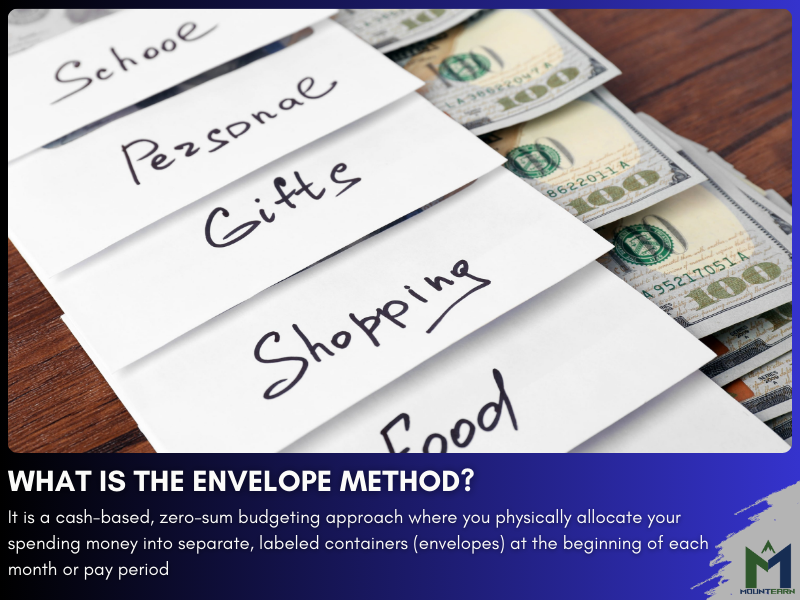

The Envelope Method: The Budgeting System for People Who Hate Budgeting

Introduction

Cash-stuffing envelopes used for simple budgeting and money management

The Envelope Method is here to tell you that you are not a financial failure; you just haven’t found a budgeting method that speaks your language. Let’s be honest: The word “budgeting” often feels less like a responsible life skill and more like a cruel financial punishment. It instantly conjures up images of tedious, guilt-inducing spreadsheets, complicated apps with too many menus, and the awful, crushing feeling of inevitable failure. For most of us, it feels like a financial straightjacket—rigid, cold, and completely detached from the glorious, messy reality of our lives.

You’ve been there. You tried to be good. You downloaded the fancy app with the beautiful graphs, only to quit when logging every single coffee became too much. You need a method that speaks your language: “easy,” “visual,” and “I need to see it to believe it.”

This system isn’t new or flashy, and it definitely doesn’t require a degree in accounting. In fact, it uses the simplest, most comforting tools available: cold, hard cash, and plain old envelopes. This isn’t just about saving money; it’s about making your money tangible, giving every single dollar a real-world purpose. It’s the ultimate permission slip to stop obsessing and start controlling—the budgeting system designed specifically for the person who genuinely, deeply hates budgeting.

Why Traditional Budgeting Fails the “Hater”

Why do so many modern budgeting methods fall flat for the average, busy person? It’s simple: They strip away all the physical reality of money and replace it with an exhausting amount of mental friction and confusion.

Think about your debit card. When you tap that piece of plastic, what happens? You hear a cheerful little “ding,” the screen says “Approved,” and that’s it. The money isn’t gone; it’s just a smaller, abstract number in a glowing rectangle. There’s zero pain. There’s no visible reduction in your available resources. It makes overspending incredibly, dangerously easy because you never feel the immediate consequence. It’s the ultimate, smooth, slippery financial disconnect that encourages us to just keep swiping and hoping.

But the real killer is the mental exhaustion.

Traditional methods feel like they demand obsessive forensic accounting. We’re asked to categorize every single purchase, from a pack of gum to a new jacket, then meticulously compare the “actual” spending to the “budgeted” guess, and constantly, manually calculate those remaining balances. For a “budget hater,” this level of detail isn’t budgeting; it’s a second, unpaid, incredibly stressful job. It turns a useful chore into a soul-crushing lifestyle, and that’s precisely why the system collapses in three weeks. We don’t need an accountant’s report; we need a system that is visual, immediate, and so brilliantly simple it’s self-policing.

The Envelope Method delivers all of that, effortlessly.

What is the Envelope Method, Really?

At its core, the Envelope Method is so beautifully, primitively simple that it feels revolutionary. Forget the spreadsheets; this is a completely cash-based, zero-sum system specifically targeting your variable expenses—the fun but dangerous categories that cause the most trouble, like groceries, dining out, and impulse shopping.

Here’s the powerful, simple premise: You decide, at the start of the month, how much you can truly afford in those key areas. You withdraw that exact amount in crisp bills, and you tuck it into a physical envelope labeled with that category’s name.

The rule is your new financial bedrock: Once the money in the envelope is gone, your spending in that category stops. Period. No borrowing from tomorrow’s paycheck. No reaching for the sneaky credit card. The incredible power comes from that physical limitation—watching the cash diminish is a visceral, immediate check on impulse spending that no app notification can ever replicate. It transforms your abstract “budget” into a protective stack of tens and twenties you can actually see, hold, and trust.

Step-by-Step: Your Human-Friendly Guide to Getting Started

Step 1: 🕵️‍♀️ Identify Your “Bleeder” Categories

Forget the huge, fixed bills like rent or your mortgage; they’re already spoken for. The Envelope Method is designed to plug the financial leaks caused by the variable expenses—the ones that tend to bleed you dry through a thousand tiny purchases. Don’t overwhelm yourself. Start small with just three to five categories where you know you tend to shrug and overspend.

  • Common Starter Categories: Groceries (the biggest offender!), Dining Out/Takeout, Fun/Entertainment, Gas/Fuel, and Personal Care (haircuts, impulse beauty buys).

Step 2: ⚖️ Set Realistic Limits (The Low-Stress Draft)

Look at your income and subtract your fixed bills. Whatever is left is your “Variable Spending Pool.” Now, honestly and realistically, divide that pool among your chosen envelopes. Crucial Rule: Don’t try to go from $800 a month on groceries to $400 overnight. That’s a setup for failure. If you currently spend $800, set your first envelope limit at $750. The goal of month one is not perfection, but gaining control and gathering data. Aim to shrink it next month.

Step 3: 💸 The “Cash Stuffing” Ritual

This is the surprisingly empowering part. Head to the bank and withdraw the total cash amount for all your envelopes. Ask for smaller bills—tens and fives are powerful psychological tools. Label your envelopes clearly (or grab a fancy binder; whatever makes you excited!). Now, physically fill them. This ritual is a financial awakening—you are physically giving every dollar a job and a place to live. You are no longer wondering where your money went; you told it exactly where to go.

Step 4: 🛡️ The “Envelope Barrier” Rule

When you leave the house to shop, you only bring the relevant envelope. Grocery shopping? Take the “Groceries” envelope. Going out with friends? Take the “Entertainment” envelope. Keep the plastic debit and credit cards saved for online purchases and fixed bills. If you reach the checkout line and the envelope is empty, the system works perfectly: you have a clear, immediate choice—put something back, or wait until next month. This is the magic of self-policing in action.

The Psychological Edge: Why This Actually Works

🖐️ The Pain of Paying is Real

Research confirms that paying with cash registers as a more emotionally painful experience than swiping plastic. That’s a good thing! Watching a crisp twenty-dollar bill leave your hand creates a tangible, split-second moment of decision. That feeling is the healthy friction that makes you pause and genuinely think twice about that impulse item—a mental checkmate that a cheerful “tap complete” noise simply can’t compete with.

👀 Visual Scarcity You Can Feel

A number in an app is abstract. It exists only digitally. But a shrinking stack of bills in your hand? That is a clear, visible countdown. When the stack gets thin, you feel a physical urgency to slow down. Your budget stops being a set of confusing rules and transforms into a very real, very physical constraint you can manage without needing to log in or calculate.

🛑 The Power of Containment

This system perfectly plugs the invisible “leakage” that ruins most budgets. Since your “Dining Out” money is physically separated from your “Fun” money, you eliminate that subconscious, casual borrowing that spirals into debt. You are given permission to spend the money in the envelope, totally guilt-free, because you know the rest of your financial future is safe and protected.

Adjusting for the Digital World: The “Digital Envelope”

Let’s face reality: we can’t pay for Netflix subscriptions or Amazon purchases with actual envelopes. We live in a world that is mostly cashless! The good news is, you can absolutely adapt the concept without sacrificing the control.

This is where the Digital Envelope steps in.

Instead of physical cash, you replicate the system using dedicated budgeting apps (like YNAB), separate checking accounts, or even just a simple spreadsheet. The key is to pre-fund the digital category before you spend. You must treat that number on the screen with the same sacred respect as a stack of twenties. You still assign every digital dollar a “job,” and when that number hits zero, you treat it like an empty envelope: you stop spending. This clever hybrid gives you the psychological clarity of the envelope system paired with the convenience of digital life.

Conclusion: The Freedom of Limits

Budgeting isn’t restriction—it’s intentionality. The Envelope Method is your tool to stop feeling guilty and start feeling powerful. It hands you the gift of a clear, simple limit, and within that clarity, you find the stress-free freedom to truly enjoy the money that remains. Start simple, grab those envelopes, and finally change your relationship with money for good.

To learn more about the psychology behind spending and budgeting, you can check out helpful guides from APA and practical money-management tools like YNAB, which explain how spending behavior changes when using cash versus cards.

Related Articles on My Website

10 Hidden Expenses That Are Killing Your Budget

Introduction

Hidden expenses that are killing your budget are often the reason you reach the end of the month thinking, “Where did all my money go?”

Let’s be real: does this happen to you?

You have a budget. You’re responsible. You pay your rent, your utilities, your car note—all the big, “adulting” stuff—right on time. You should feel in control.

But when you look at what’s left, you’re just left scratching your head, wondering, “How?” How is there so little left over when you were so careful?

I’ll tell you how: Your budget has a bunch of tiny, invisible leaks.

We’re not talking about one big, disastrous expense. We’re talking about the “death by a thousand cuts” spending. It’s the $15 streaming service you haven’t watched in months. It’s the $3 ATM fee you paid because you were in a hurry. It’s the $7 “service charge” on that food delivery you “deserved” after a long day.

These little “convenience” costs feel harmless in the moment, but they are silently sabotaging your financial goals.

It’s time to turn on the lights and see what’s really going on. Let’s hunt down the 10 most common hidden expenses that are killing your budget that are probably killing your budget, one small purchase at a time.

“You can’t fix what you don’t see. Start uncovering the hidden expenses that are killing your budget, and you’ll find the path to financial freedom.”

hidden expenses that are killing your budget illustration

What, Why and Tips for hidden expenses that are killing your budget

The “Forgot-About-It” Subscriptions

What it is: outdated streaming sites, unused gym memberships, premium app features, and “free trials” that auto-renewed.
Why it’s hidden: Businesses rely on you forgetting because they’re tiny, automated, and simple to overlook.

💡 Tip: To quickly locate and terminate forgotten subscriptions, use apps like Truebill or Mint.

Bank & ATM Fees

What it is: Overdraft fees, monthly account fees, or ATM fees that are not part of the network.
Why it’s hidden: They add up quickly and quietly, costing a few dollars here and $35 there.

💡 Tip: Always double-check your claims. To save hundreds of dollars a year, think about moving to an online or fee-free bank.

Food Delivery & Convenience Markups

What it is: Driver tips, inflated menu prices, delivery fees, and service charges.
Why it’s hidden: When you include all the extras, that $15 burger can easily become a $30 order.

💡 Tip: To cut these expenses in half, plan your meals for the week or pick up your food whenever you can.

Credit Card Interest

What it is: The expense of keeping a credit card balance, which is frequently 20%+ APR.
Why it’s hidden: Making minimum payments gives you a sense of control, but in reality, you’re just gradually increasing your bank payments.

💡 Tip: Always make larger payments than the minimum or transfer your balance to a card with 0% annual percentage rate for 12–18 months.

“Lifestyle Creep” Habits

What it is: The minor “upgrades” that go with increased income, such as branded goods, lunches out, and high-quality coffee.
Why it’s hidden: is that it occurs gradually. Unaware of it, you grow used to spending more.

💡 Tip: Before changing your lifestyle, save or invest half of any raise in income.

Utility & Data Creep

What it is: Increased mobile data fees, spare electronics that aren’t being used, or rising electric costs.
Why it’s hidden: Since bills change every month, small increases are frequently overlooked.

💡 Tip: To identify slow increases early, unplug unused devices and keep track of bills in a spreadsheet.

Irregular Maintenance Costs

What it is: Home maintenance, auto repairs, tire replacements, and malfunctioning appliances are all inevitable.
Why it’s hidden: They surprise you because they’re unpredictable.

💡 Tip: Set up a “sinking fund” to cover these expenses. To be prepared when they arise, set aside a small sum every month.

Unnecessary Insurance & Warranties

What it is: Superfluous policies or longer guarantees that don’t offer adequate protection.
Why it’s hidden: Although they seem wise and reasonably priced, they frequently serve only as a means of making money for the seller.

💡 Tip: Only cover items that you cannot afford to replace. Don’t buy expensive or short-lived items with extended warranties.

Food Waste

What it is: Discarding expired goods, forgotten leftovers, or spoiled produce.
Why it’s hidden: You keep track of how much you spend on groceries, not what you throw out. Still, money is lost.

💡 Tip: Keep track of how much food you actually use, plan meals in advance, and store food properly.

Impulse Spending & “Buy Now, Pay Later”

What it is: “Buy Now, Pay Later” (BNPL) traps, checkout line extras, or flash sales.
Why it’s hidden: Small, seemingly innocuous “interest-free” payments are used by BNPL to conceal the entire cost.

💡 Tip: Apply the 24-hour rule and hold off on making any unnecessary purchases for a day. Most cravings go away on their own.

How to Find and Fight Back these hidden expenses that are killing your budget

Be a financial detective: Review the last 2–3 months of statements. Highlight every automatic or “forgotten” charge.
Cancel and consolidate: Cut out what you don’t need, and look for lower-interest debt options.
Set up sinking funds: Prepare for irregular costs before they hit.
Automate your savings: Transfer money to savings the day you get paid — pay yourself first.
Practice the 24-hour rule: Delay non-essential spending to protect your budget from impulse buys.

Conclusion

Saying no to everything isn’t the key to taking back control of your finances; awareness is.

Every subscription cancellation, fee avoided, or meal planned is a tiny victory. When combined, they assist you in regaining financial control and allocating funds to your savings, debt relief, or next major objective.

You put a lot of effort into earning your money; now, make sure it does the same for you.

Once you identify your hidden expenses that are killing your budget, start building your $1,000 starter emergency fund to handle unexpected costs.

“It’s not the big bills that break your wallet — it’s the hidden expenses that are killing your budget silently every month.”

5 Budgeting Mistakes That Keep You Broke (and How to Fix Them)

Budgeting mistakes can sneak into even the best money plans. Even if you believe you stick to your budget exactly, minor mistakes can stealthily drain your funds. Yes you succeeded. You took a seat, made a budget, and listed your earnings and expenses. You should be in charge of your earnings, Isn’t it? Why, then, do you still look at your account balance at the end of the month, wondering where all your money went?

Dont’ worry. You are not alone if you believe you are “doing everything right” but are still broke. A budget is not a magic wand that can be set and put away. Your financial plan is frequently being slowly undermined by a few common and easily fixable everyday mistakes.

Let’s look at the five most common budgeting mistakes that are costing you money, and especially, the easy solutions you can put in place right now.

budgeting mistakes to avoid

Budgeting Mistakes #1: The Crash-Diet Budge

The Problem:

You establish a highly restrictive budgeting mistakes that eliminates all enjoyment from your life. No subscriptions, no hobbies, no out-of-town dinners, and no coffee. You’ve effectively reduced your financial situation to “rice and beans.” This is unnecessary

The Fix: Budget for Fun (Seriously!)

A successful budget needs to be achievable. You are not a robot; you are a human. Making plans for your “wants” rather than acting if they don’t exist is the answer.

Set aside particular funds for your non-essentials.
For example, “Guilt-Free Spending,” “Morning Coffee,” “Restaurant Money,” or “Hobby Fund.”

You can get rid of the responsibility and urge to binge by allowing yourself to spend a certain amount on enjoyment. It’s the distinction between preparing for a piece of cake and consuming the entire cake out of frustration.

Budgeting Mistakes #2: You Forget the “Budget Busters”

The Problem:

Your monthly budget for groceries, rent, and gas is perfect. Then, suddenly:

  • Your annual car insurance is due ($600)
  • Your website hosting bill renews ($120)
  • It’s time for holiday gifts ($300)
  • Your car needs new tires ($500)

These “irregular” or “non-monthly” expenses completely fall you from your earnings from budgeting mistakes, forcing you to pull from savings or, worse, go into debt.

The Fix: Create “Sinking Funds”

A mini-savings account for a specific, known future expense is called a sinking fund.

List all of your annual non-monthly costs, such as auto insurance, birthdays, holidays, yearly subscriptions, and auto maintenance. Calculate the approximate yearly cost of each (e.g., Holiday Gifts: $600). Take that sum and divide it by 12 (or the number of paychecks you have left until you need it). Every month, set aside that little sum.

For instance, $600 for holiday presents ÷ 12 = $50 a month. You now have $600 in cash on hand for December. It’s a planned expense, not an emergency.

Budgeting Mistakes #3: You Don’t Give Every Dollar a “Job”

The Problem:

You keep track of your major expenses, such as rent and utilities, but you also have a significant, unclear “leftover” fund in your checking account. “Great, I have $700 left for stuff,” you think. This “stuff” money mysteriously disappears when used for small, unrecorded purchases, like an Amazon order or a snack.

The Fix: Use a Zero-Based Budget (ZBB)

This method ensures that every single dollar you earn is assigned to a purpose before the month begins.

Example budget:

  • Income: $3,000
  • Rent: $1,200
  • Utilities: $150
  • Groceries: $400
  • Sinking Funds: $200
  • Debt Repayment: $250
  • Fun Money: $150
  • Investments: $100
  • Extra Savings: $550

Total: $3,000 – $3,000 = $0

Now, every dollar has a “job.” You are telling your money where to go instead of wondering where it went.

Budgeting Mistakes #4: You “Set It and Forget It”

The Problem:

You haven’t examined your budget since creating it in January. However, life isn’t static; your goals change, your income shifts, and prices rise. If a budget doesn’t change, it becomes outdated and useless.

The Fix: Schedule Regular “Budget Meetings”

Your budget is a living document. It needs care and attention.

  • Weekly Check-in (5 minutes): Open your budget and track spending. Overspent on groceries? Adjust by moving $20 from your “restaurants” category.
  • Monthly Meeting (30 minutes): Review last month’s numbers, fix what didn’t work, and plan next month’s budget.

When you treat budgeting as an ongoing process, you stay flexible and confident with your money.

Budgeting Mistakes #5: You’re Using the Wrong Tools (For You)

The Problem:

After a week, you gave up on the complicated spreadsheet your friend suggested. Or perhaps you’re making yourself use an app when you’d rather use paper and pen. You won’t use your budgeting method if it feels difficult.

The Fix: Find the System You’ll Actually Use

The best budget is the one you can stick with.

Try these:

  • Apps: YNAB (You Need A Budget), Mint, or Monarch Money for automation.
  • Spreadsheets: Google Sheets or Excel for control and customization.
  • Envelope System: Use physical or digital envelopes for variable spending categories.
  • Notebook: Sometimes, writing things down is the simplest and most effective way.

Experiment for a month. If you hate your method, switch. The goal is consistency, not complexity.

Conclusion

A budget is a route to freedom, not a prison. It’s the process of giving your money instructions rather than wondering where it went.

Don’t allow these common mistakes to stop your advancement. This week, implement one of the fixes suggested in this article. You’ll stop living paycheck to paycheck and begin establishing true financial stability sooner rather than later if you get started.

Your future self will be grateful and thank full for you.

Want a simple way to start budgeting?
Check out our first guide — The 50/30/20 Budget Rule Explained — to learn how to divide your income wisely and take control of your money today.

The 50/30/20 Budget Rule: Your First Step to Financial Freedom

The 50/30/20 budget rule. When the month comes to an end, do you ever question where all of your money went? Most people have trouble tracking down where their paycheck goes, so you’re not alone.

The good news? Making a budget doesn’t have to be difficult. You can take charge of your finances with the 50/30/20 rule by creating a simple, adjustable plan that will increase your savings and reduce your stress.

What Is the 50/30/20 Rule?

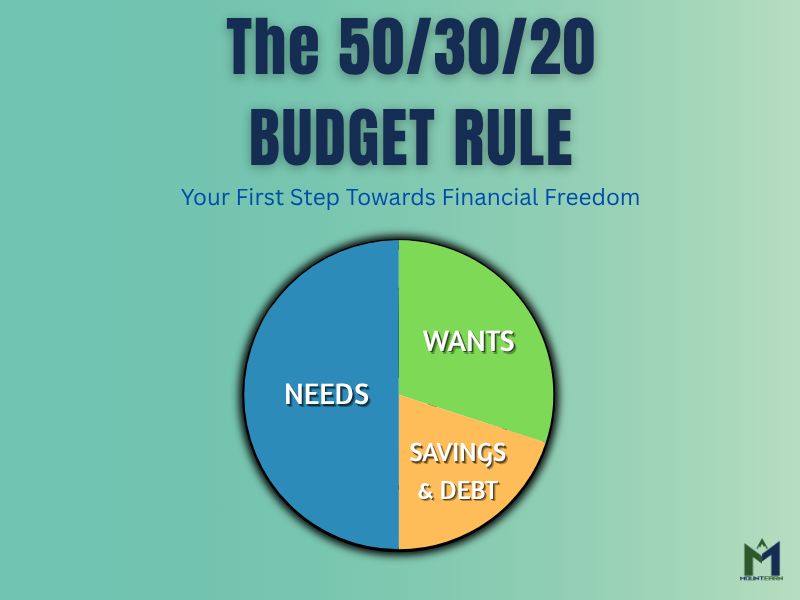
The 50/30/20 rule is an easy budgeting method that divides your after-tax income into three clear categories:

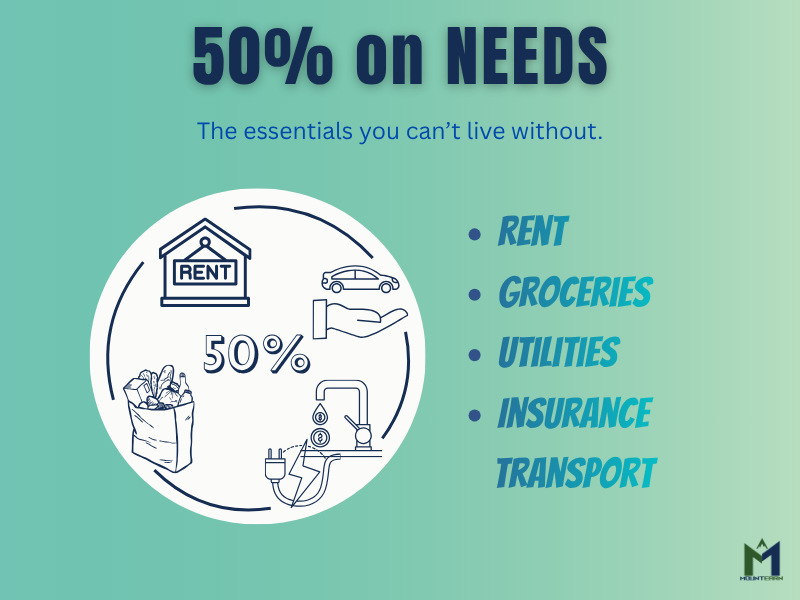
  • 50% for Needs — essential expenses you must pay.
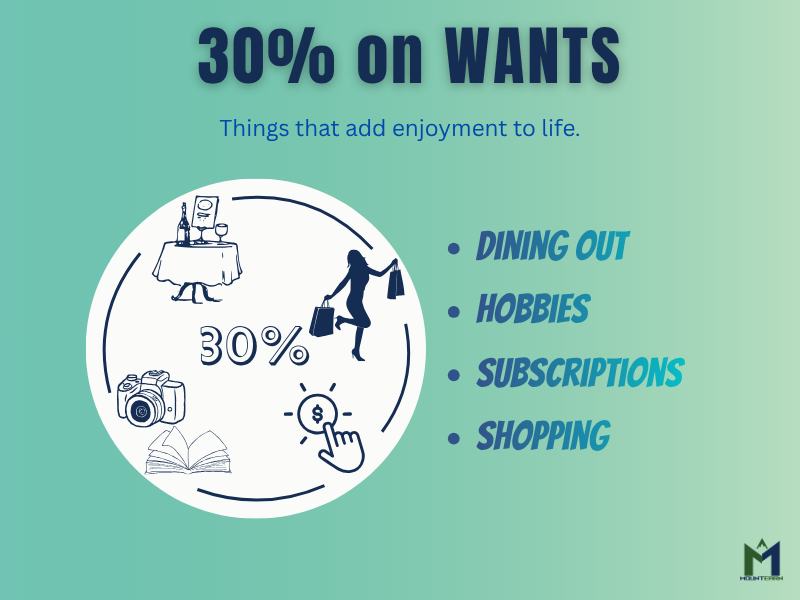
  • 30% for Wants — the fun stuff that makes life enjoyable.
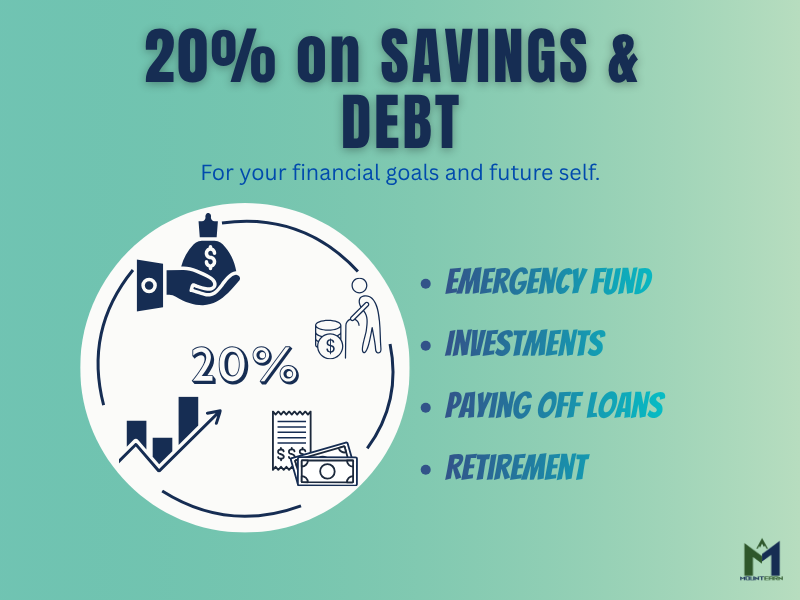
  • 20% for Savings & Debt Repayment — money for your future.

This simple habits helps you balance living well today and saving for the future.

You can use the 50/30/20 rule more successfully and accomplish your financial objectives more quickly if you have a thorough understanding of each category.

50% for Needs in the 50/30/20 Budget Rule

The things that you cannot live or work without are your “needs.” These expenses are necessary to maintain the smooth operation of your daily life and cannot be negotiated.

Examples include:

  • Rent or mortgage payments
  • Groceries and utilities
  • Insurance premiums
  • Transportation (fuel, bus fare, or car payments)
  • Minimum loan payments

Don’t let these make up for more than half of your income. Look for ways to reduce expenses if your needs exceed 50%, such as obtaining less expensive insurance or cooking more at home.

30% for Wants in the 50/30/20 Budget Rule

The things that make life enjoyable but aren’t strictly necessary are your “wants.” Your basic living won’t suffer if you skip them, but they do bring comfort and joy.

Examples:

  • Dining out or coffee runs
  • Streaming subscriptions
  • Shopping and hobbies
  • Vacations or entertainment

Keep in mind that limiting your wants can help you save money for bigger things.

20% for Savings & Debt Repayment in the 50/30/20 Budget Rule

Where your financial growth happens here. The 20% portion is dedicated to building a secure future for you.

You can use it for:

  • Building an emergency fund
  • Paying off credit cards or student loans faster
  • Investing in index funds or retirement accounts

Even a small start makes a big difference. Within time, your savings will grow, your debts getting shrink, and your financial freedom expands.

How to Get Started in 4 Simple Steps

Step 1: Calculate Your After-Tax Income

  • Your after-tax income is the money you actually take home after taxes.
  • Look at your paycheck, bank statement, or pay stub to find this number.
  • Example: If your monthly salary is $3,000 and taxes are $500, your after-tax income is $2,500.

Step 2: Track Your Spending

  • Keep track of every expense for at least a month.
  • You can use:
    • Apps like Mint or YNAB
    • A simple spreadsheet
    • A notebook and pen
  • This step shows you where your money is actually going, which is the key to budgeting.

Step 3: Categorize Your Spending

  • Divide your spending into the three 50/30/20 categories:
    1. Needs – essentials like rent, groceries, and bills
    2. Wants – lifestyle choices like dining out, shopping, hobbies
    3. Savings/Debt – emergency funds, investments, or paying off debt
  • Go through last month’s expenses and assign each item to the correct category.

Step 4: Adjust and Plan

  • Compare your actual spending to the 50/30/20 targets:
    • 50% for needs
    • 30% for wants
    • 20% for savings/debt
  • If you’re over in one category, look for ways to cut back slightly in that area.
  • Set goals for the next month and stick to the plan — even small changes add up.

What If My Numbers Don’t Fit?

“My needs are way over 50%!”
That’s typical; try cutting fixed expenses by cooking more meals at home, switching providers, or moving to a smaller apartment.

“I have a lot of high-interest debt.”
Make debt repayment your top priority by temporarily taking extra money out of your Wants category. Put that money into savings after the debt is paid off.

Conclusion

The 50/30/20 budget rule is a simple, adaptable framework that helps you balance your money. It provides you with freedom to plan for your dreams, clarity, and control.

Are you prepared to assume control? To see how quickly your financial habits change, start by keeping a spending record today.

“Start your financial freedom journey today!